Observations on calcium and PMS/PMDD symptoms. Observaciónes sobre calcio y síntomas de SPM/TDPM.

After several visits to the doctor, I finally received references for hormone blood tests. I definitely do not regret spending time on doctor visits and laboratory tests, because it was really interesting to observe hormonal fluctuations throughout the cycle. The results clearly showed that my progesterone level quickly rises during the luteal phase, close to 50 nmol/l. One day/several days before menstruation, my progesterone drops to 1.8 nmol / l. At the peak, my progesterone was close to the top threshold. The level was not exactly abnormal, but research indicates that some women react negatively to changes in hormone levels.

Premenstrual dysphoric disorder (PMDD)  – a much more severe form of premenstrual syndrome (PMS). It may affect women of childbearing age. The exact cause of PMDD is not known. It may be an abnormal reaction to normal hormone changes that happen with each menstrual cycle. The hormone changes can cause a serotonin deficiency.

What is premenstrual dysphoric disorder (PMDD)?

I also came across an article in the Journal of Clinical Endocrinology & Metabolism, which states that there may be cyclical changes in calcium metabolism during the menstrual cycle in women with PMDD. Interesting points from the article:

  • Irritability, anxiety, and mania have been associated with hypocalcemia, whereas increased calcium concentrations have been noted in some patients with depression.
  • Three separate investigations have demonstrated that the dysphoria, anxiety, depression, and somatic symptoms of PMS all respond favorably to either increased dietary calcium intake or daily calcium supplementation
  • Increased calcium intake proved to benefit significantly all four major categories of PMS symptoms (negative affective symptoms, water retention symptoms, food cravings, and pain symptoms).
  • When compared with asymptomatic women, women with PMS were shown to have exaggerated fluctuations of the calcium-regulating hormones across the menstrual cycle with evidence of vitamin D deficiency and secondary hyperparathyroidism.

For the authors’ study – a total of 129 women completed the timed biochemical and hormone evaluation with 115 (68 PMDD and 47 controls) providing hormone data meeting criteria for analysis. Results – Although the screening baseline 24-h urine calcium was not found to be significantly different between the groups, the random urine calcium collections during hormonal sampling were significantly lower in the PMDD group compared with controls.

In the PMDD group, total serum calcium was found to be significantly lower at 3 points: at follicular phase 1 (menses) (9.17 ± 0.55 mg/dl, P < 0.001) compared with later phases 2, 3, and 4; at midcycle phase 3 (9.25 ± 0.55 mg/dl) compared with phase 2 (9.33 ± 0.58 mg/dl, P = 0.036); and during late luteal phase 5 (9.18 ± 0.73 mg/dl) compared with phase 4 (9.27 ± 0.55 mg/dl, P = 0.018). Ionized calcium did not fluctuate as dramatically as did total calcium, but a large difference was noted between early phases 1 and 2 of the menstrual cycle again with phase 1 having the lowest ionized calcium concentration (1.166 ± 0.072 vs. 1.175 ± 0.073 mmol/liter, P = 0.069). Intact PTH peaked in follicular phase 2 (56.9 ± 35.3 pg/ml) following the decline in serum calcium during phases 1 and 5. Follicular phase intact PTH was significantly higher than luteal phase concentrations and reached its nadir in luteal phase 4 (50.9 ± 34.4 pg/ml, P < 0.01). In conjunction with the follicular phase rise in intact PTH, serum pH was lower in the follicular phase 1 and 2 compared with midcycle phase 3 and luteal phase 4 (phase 1, 7.36 ± 0.004 vs. phase 3, 7.37 ± 0.023; P = 0.015; data not shown). The concentration of 1,25(OH)2D declined precipitously in luteal phase 4 and was significantly lower compared with all earlier phases (phase 4, 45.0 ± 27.5 vs. phase 3, 49.6 ± 27.5 pg/ml; P = 0.006). Urine calcium and 25OHD concentrations did not appear to vary between individual phases in the PMDD group.

Cyclical Changes in Calcium Metabolism across the Menstrual Cycle in Women with Premenstrual Dysphoric Disorder


*************************************************************************************

Después varias visitas al doctor, finalmente recibí referencias para análisis de sangre de hormonas. Definitivamente no me arrepiento de pasar tiempo en las visitas al médico y las pruebas de laboratorio, porque fue realmente interesante observar las fluctuaciones hormonales a lo largo de ciclo. Los resultados mostraron claramente que mi nivel de progesterona sube rápidamente durante la fase lútea, cerca de 50 nmol / l. Un día/ varios días antes la menstruacion, mi progesterona baja a 1.8 nmol / l. En el pico, mi progesterona estaba cerca del umbral superior. El nivel no era exactamente anormal, pero la investigación indica que algunas mujeres reaccionan negativamente a los cambios en los niveles hormonales.

Trastorno disfórico premenstrual (TDPM): una forma mucho más grave de síndrome premenstrual (SPM). Puede afectar a mujeres en edad fértil. La causa exacta de TDPM no se conoce. Puede ser una reacción anormal a los cambios hormonales normales que ocurren con cada ciclo menstrual. Los cambios hormonales pueden causar una deficiencia de serotonina.

También me encontré con un artículo en el Journal of Clinical Endocrinology & Metabolism, que establece que puede haber cambios cíclicos en el metabolismo del calcio durante el ciclo menstrual en mujeres con TDPM. Puntos interesantes del artículo:

  • La irritabilidad, la ansiedad y la manía se han asociado con hipocalcemia, mientras que se han observado concentraciones elevadas de calcio en algunos pacientes con depresión.
  • Tres investigaciones separadas han demostrado que la disforia, la ansiedad, la depresión y los síntomas somáticos del síndrome premenstrual responden favorablemente al aumento de la ingesta de calcio en la dieta o a la suplementación diaria de calcio.
  • El aumento de la ingesta de calcio demostró beneficiar significativamente las cuatro categorías principales de síntomas de SPM (síntomas afectivos negativos, síntomas de retención de agua, antojos de alimentos y síntomas de dolor).
  • En comparación con las mujeres asintomáticas, las mujeres con síndrome premenstrual mostraron fluctuaciones exageradas de las hormonas reguladoras de calcio a lo largo del ciclo menstrual con evidencia de deficiencia de vitamina D e hiperparatiroidismo secundario.

Para el estudio de los autores, un total de 129 mujeres completaron la evaluación bioquímica y hormonal cronometrada con 115 (68 TDPM y 47 controles) que proporcionaron datos hormonales que cumplían los criterios para el análisis. Resultados: aunque no se encontró que el calcio basal en orina de 24 h para la detección sea significativamente diferente entre los grupos, las recolecciones aleatorias de calcio en orina durante el muestreo hormonal fueron significativamente más bajas en el grupo TDPM en comparación con los controles.

En el grupo TDPM, se encontró que el calcio sérico total era significativamente más bajo en 3 puntos: en la fase folicular 1 (menstruación) (9.17 ± 0.55 mg / dl, P <0.001) en comparación con las fases posteriores 2, 3 y 4; en la fase 3 del ciclo medio (9,25 ± 0,55 mg / dl) en comparación con la fase 2 (9,33 ± 0,58 mg / dl, P = 0,036); y durante la fase lútea tardía 5 (9,18 ± 0,73 mg / dl) en comparación con la fase 4 (9,27 ± 0,55 mg / dl, P = 0,018). El calcio ionizado no fluctuó tan dramáticamente como el calcio total, pero se observó una gran diferencia entre las fases tempranas 1 y 2 del ciclo menstrual nuevamente con la fase 1 con la concentración más baja de calcio ionizado (1.166 ± 0.072 vs. 1.175 ± 0.073 mmol / litro , P = 0,069). La PTH intacta alcanzó su punto máximo en la fase folicular 2 (56,9 ± 35,3 pg / ml) después de la disminución del calcio sérico durante las fases 1 y 5. La PTH intacta en la fase folicular fue significativamente mayor que las concentraciones de la fase lútea y alcanzó su punto más bajo en la fase lútea 4 (50,9 ± 34,4 pg / ml, P <0,01). Junto con el aumento de la fase folicular en la PTH intacta, el pH sérico fue menor en la fase folicular 1 y 2 en comparación con la fase 3 del ciclo medio y la fase lútea 4 (fase 1, 7.36 ± 0.004 vs. fase 3, 7.37 ± 0.023; P = 0.015 ; datos no mostrados). La concentración de 1,25 (OH) 2D disminuyó precipitadamente en la fase lútea 4 y fue significativamente menor en comparación con todas las fases anteriores (fase 4, 45.0 ± 27.5 vs. fase 3, 49.6 ± 27.5 pg / ml; P = 0.006). Las concentraciones de calcio en la orina y 25OHD no parecen variar entre las fases individuales en el grupo TDPM.
Vitamins before antidepressants . Vitaminas antes de los antidepresivos.

Texto en español a continuación.

This post will not be against antidepressants. I only want to share my experiences, in case they might help someone. I found out the hard way that eating healthy and obtaining all the basic vitamins is necessary (but not sufficient) for mood stability and emotional regulation. Unfortunately not all doctors or psychiatrists check for vitamin and mineral deficiencies before prescribing antidepressants. There is a lot of research indicating that many vitamins and minerals are important for the functioning of neurotransmitters. So I am not stating ‘always vitamins instead of antidepressant’, but in my opinion as a patient, diet should always be reviewed first. Especially if you have any gastrointestinal problems, family history of gastrointestinal issues, or you live in a northern country. Also if you are vegan, vegetarian, or have any other food restrictions.

I have written in my previous posts about getting a diagnosis of autoimmune encephalitis, but let’s set that aside for now. I did end up being referred to a neurologist, but in this post I want to focus on my experience with psychiatrists. When I was referred to a psychiatrist by the emergency department, several blood tests were performed. Blood glucose level, iron level, thyroid stimulating hormone (TSH) test results were sent to the psychiatrist. Since these test results came back normal, right away the psychiatrist prescribed me mirtazapine.

Mirtazapine did not help my mood and I only gained weight on it and had trouble waking up in the morning. Therefore, my dissatisfaction with this approach is that several important blood tests were not prescribed. For example, I live in a northern country, therefore it is possible to be deficient in vitamin D. They also didn’t ask me about my diet, but a spicy diet can lead to deficiencies in B vitamins and omega 3 fatty acids. Additional point – my blood glucose was checked only once, it was not proven how I react to eating carbohydrates.

Later I discovered that I was deficient in vitamin D, that my blood sugar level would jump too high after eating refined carbohydrates, and I was not getting enough folic acid and calcium. By not performing the necessary laboratory tests, the doctor lost a lot of time and delayed my treatment. I was also taking unnecessary high doses of antidepressants, which were not helping.

*************************************************************************************

Esta publicación no será contra los antidepresivos. Solo quiero compartir mis experiencias, en caso de que puedan ayudar a alguien. Descubrí por las malas que comer sano y obtener todas las vitaminas básicas es necesario (pero no suficiente) para la estabilidad del estado de ánimo y la regulación emocional. Desafortunadamente, no todos los médicos o psiquiatras verifican las deficiencias de vitaminas y minerales antes de recetar antidepresivos. Hay mucha investigación que indica que muchas vitaminas y minerales son importantes para el funcionamiento de los neurotransmisores. Por lo tanto, no estoy diciendo “siempre vitaminas en lugar de antidepresivos”, pero en mi opinión como paciente, la dieta siempre debe revisarse primero. Especialmente si tiene problemas gastrointestinales, antecedentes familiares de problemas gastrointestinales o si vive en un país del norte. Además, si eres vegano, vegetariano o tienes otras restricciones alimenticias.

He escrito en mis publicaciones anteriores sobre el diagnóstico de encefalitis autoinmune, pero dejemos eso de lado por ahora. Terminé siendo referido a un neurólogo, pero en esta publicación quiero centrarme en mi experiencia con los psiquiatras. Cuando el departamento de emergencias me remitió a un psiquiatra, me realizaron varios análisis de sangre. Los resultados de las pruebas de nivel de glucosa en sangre, nivel de hierro y hormona estimulante de la tiroides (TSH) se enviaron al psiquiatra. Como los resultados de estas pruebas mostraron ser normales, de inmediato el psiquiatra me recetó mirtazapina.

Mirtazapine no ayudó mi humor y solo subí de peso, y tuve dificultad para despertar en las mañanas. Entonces, mi insatisfacción con este enfoque está que varios análisis de sangre importantes no fueron prescritas. Por example, vivo en un país del norte, por lo tanto está posible estar deficiente en vitamina D. También no me preguntaron sobre mi dieta, pero una dieta espicifica puede conducir a las deficiencias en vitaminas B y ácidos grasos omega 3.  Punto adicional – mi glucemia se comprobó solo una vez, no fue probado cómo reacciono al comer carbohidratos.

Mas tarde descubrí que era deficiente en vitamina D, que mi nivel de azúcar en la sangre saltaria demasiado alto después de comer carbohidratos refinados, además no estaba recibiendo suficiente ácido fólico y calcio. Al no realizar las pruebas de laboratorio necesarias, el doctor perdió mucho tiempo y retrasó mi tratamiento. Además estaba tomando dosis altas innecesarias de antidepresivos, que no estaban ayudando.

SSRIs, fungi, and exotic botanicals

This post is about comparing my experiences with fluoxetine (Prozac – an SSRI), psilocybe mushrooms, lion’s mane mushroom, and yerba mate tea. Of course this is my personal experience, not a medical study. Remember that everyone is affected differently by psychoactive compounds. In fact recently my friend told me an interesting scientific theory in regards to why humans differ a lot psychologically. Have you heard of fungi that make ants climb on top of a leaf, hook themselves, and stay there without eating, basically committing ant suicide? The spores of the fungi then burst from the ant and go on to grow into new fungi. Ophiocordyceps unilateralis is called the zombie-ant fungus.

“Researchers think the fungus, found in tropical forests, infects a foraging ant through spores that attach and penetrate the exoskeleton and slowly takes over its behavior.

As the infection advances, the enthralled ant is compelled to leave its nest for a more humid microclimate that’s favorable to the fungus’s growth. The ant is compelled to descend to a vantage point about 10 inches off the ground, sink its jaws into a leaf vein on the north side of a plant, and wait for death.

Meanwhile, the fungus feeds on its victim’s innards until it’s ready for the final stage. Several days after the ant has died, the fungus sends a fruiting body out through the base of the ant’s head, turning its shriveled corpse into a launchpad from which it can jettison its spores and infect new ants.”

So what does this have to do with humans being different? The theory says that humans evolved to react differently to same psychoactive molecules in order to not become victims to simple fungi organisms. Since the infectious fungi are not very complex organisms, they can only release so many molecules. By evolving to have complex brains and having individuals react differently to the same psychoactive molecule, humans became resistant to being overtaken by simple fungi. The theory is that there is no one molecule that a fungi could produce that would make all humans act the same, stop whatever they were doing, walk to a nice moist and wooded area, lie down, and wait for fungi spores to emerge from them.

Back to fluoxetine and shrooms

Fluoxetine

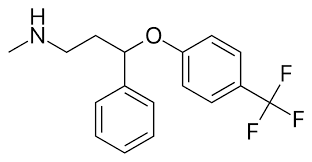
Fluoxetine is a selective serotonin reuptake inhibitor. N-methyl-3-phenyl-3-[4-(trifluoromethyl)phenoxy]propan-1-amine.  It delays the reuptake of serotonin, resulting in serotonin persisting longer when it is released. Also dopamine and norepinephrine may contribute to the antidepressant action of fluoxetine in humans.

From wiki: Fluoxetine elicits antidepressant effect by inhibiting serotonin re-uptake in the synapse by binding to the re-uptake pump on the neuronal membrane to increase its availability and enhance neurotransmission. Norfluoxetine and desmethylfluoxetine are metabolites of fluoxetine and also act as serotonin re-uptake inhibitors, so increase the duration of action of the drug. Fluoxetine appeared on the Belgian market in 1986. In the U.S., the FDA gave its final approval in December 1987, and a month later Eli Lilly began marketing Prozac.

fluoxetine

Fluoxetine is one of medications considered to be effective for PMDD (premenstrual dysphoric disorder). Also research indicates that low doses of fluoxetine could help with PMS. PMS appears to be triggered by the fall in secretion of the ovarian sex steroid hormone progesterone that occurs towards the end of the menstrual cycle and leads to a decline in its breakdown product allopregnanolone, which acts in the brain as a potent sedative and tranquilising agent. In other words, women with PMS are undergoing a type of drug withdrawal response from an in-built, tranquilising steroid chemical in their brains. New research shows that antidepressants such as fluoxetine inhibit a specific enzyme in the brain, which deactivates allopregnanolone, therefore maintaining the chemical balance of this in-built tranquiliser in the brain. Recent findings published in the British Journal of Pharmacology, show that short-term treatment with a low dose of fluoxetine immediately prior to the rat’s premenstrual period not only raised brain allopregnanolone and prevented the development of PMS-like symptoms but also blocked the increase in excitability of brain circuits involved in mediating the stress and fear responses that normally occur during this phase of the cycle.

Enzyme identified that could lead to targeted treatment for PMS

A review of studies found that fluoxetine was more tolerabled by female patients than tricyclic amine antidepressants (Amitriptyline, Imipramine). ” In this study, a retrospective analysis of 11 randomized, double-blind, well-controlled trials was done to compare data from 427 female patients on fluoxetine and 423 female patients on TCAs. Both fluoxetine and TCAs significantly reduced the HAMD17 total mean score from baseline to end point, week 5 (fluoxetine, 24.35 to 14.37; TCAs, 24.57 to 14.43; p < 0.001). Both treatment groups were associated with significant reductions in the HAMD17 anxiety/somatization and insomnia subfactor scores. Abnormal vision, constipation, dizziness, dry mouth, and somnolence occurred more frequently (p < 0.05) in the TCA group. Insomnia and nausea were the only adverse events more common (p < 0.05) in the fluoxetine group. This study demonstrates that fluoxetine is an effective and tolerable agent for the treatment of major depressive disorder in women.”

Fluoxetine vs. tricyclic antidepressants in women with major depressive disorder

My experience with fluoxetine – the first time that I took 10mg of fluoxetine, I felt a difference in less than three hours. It was as if I was taken out of a dark basement and into a sunny day in July. Unfortunately I also experienced insomnia that did not go away and I had a sense of apathy, in the end I stopped taking fluoxetine, but I know many women who swear by it.

Psilocybin

Next I will mention psilocybin. Psilocybin is a psychedelic compound produced by more than 200 species of mushrooms. Psilocybin is quickly converted in human body to psilocin. Psilocin is a prtial agonist for several serotonin receptors. An agonist is a chemical that binds to a receptor and activates the receptor to produce a biological response. Recently there has been increased reseach interest in psilocybin and how it could help with depression.

“A landmark study conducted by the Beckley/Imperial Research Programme has provided the first clinical evidence for the efficacy of psilocybin-assisted psychotherapy to treat depression, even in cases where all other treatments have failed. We gave oral psilocybin to 20 patients with treatment-resistant depression, all of whom had previously tried at least two other treatment methods without success. Participants had suffered from depression for an average of 18 years, with severity ranging from moderate to severe. Each patient received two doses of psilocybin (10 and 25mg) 7 days apart, accompanied by psychological support before, during, and after each session. All participants also underwent brain scans to investigate the neural underpinnings of psilocybin mechanisms of action on depression. Follow-up examinations were carried out at 5 weeks, and three and six months. Results highlights All patients showed some reductions in their depression scores at 1-week post-treatment and maximal effects were seen at 5 weeks, with results remaining positive at 3 and 6 months. Notably, reductions in depressive symptoms at 5 weeks were predicted by the quality of the acute psychedelic experience. The drug was also well tolerated by all participants, and no patients sought conventional antidepressant treatment within 5 weeks of the psilocybin intervention. While it is important to note that this was a relatively small study with no control group, placebo, or ‘blinding’ (meaning participants were fully aware what they were getting), the results are extremely encouraging and confirm that psilocybin is safe to give to depressed patients, warranting further research into this area.”

Sceletium tortuosum (Kanna) – a plant commonly found in South Africa.  Laboratory studies have found that Sceletium alkaloids are selective serotonin reuptake inhibitors (SSRIs). Thus, they have the same action as pharmaceutical SSRIs such as Prozac. Animal studies have found that Sceletium can improve mood and reduce anxiety-related behaviours.


Clams and coffee for a good morning

I like B vitamins and caffeine, that is a good combinations. And a bit of carbs. Coffee, clams, and oatmeal bar with dates makes a good breakfast. I don’t know the mechanism, but I am finding that coffee helps me to be more present in the moment with fewer anxious thoughts about the future. Going back to coffee was not a random idea, there are several studies in regards to the use of caffeine for treatment resistant OCD. By the way, OCD is not just about washing your hands multiple times or checking five times that you locked the door. The worst aspect of if it is how your mind is affected by unwanted and intrusive thoughts. There are infinite types of OCD, it can impact on any thought, on any subject, on any person, on any fear, and frequently fixates on what’s important in a person’s life. For example, if religion is important to someone, OCD fixates on unwanted intrusive thoughts around religion, perhaps making the sufferer believe their actions/thoughts will offend their god. Another example is if someone begins a new relationship, OCD can make a person question that relationship, their feelings, their sexuality resulting in almost constant rumination, perhaps with the sufferer worrying that they may be misleading their partner.

Obsessive thoughts are what happens when you just want to go for a walk in the forest. It’s a warm day, finally summer, you are surrounded by colourful moss on intriguing rocks. You want to wander around observing the details of nature, but your mind is fixated on the thought that there is no point. There is no god, therefore our lives are meaningless, and there is no point of this wandering. Or the thought is – I don’t have a child, so I need to work on getting a family. And then you feel that because you haven’t achieved this goal, you will be punished for wandering around the forest. You should be punished for any enjoyment as those are not focused on the goal. You need to solve the problem at hand, you need to act now, you need to think through the plan. And it goes on.

B vitamins are essential for creating dopamine, epinephrine, serotonin, and myelin. They also help the mind focus, help hemoglobin hold oxygen and lower cholesterol. Vitamin B is essential to good health. It is also used for energy production in the human cells. B vitamins help convert food often consumed as carbohydrates into fuel. They also help the nervous system function properly. B vitamins are water-soluble, which means that they are easily dissolvable in water and easily excreted out of the body via urine output. As a result of this type of vitamin that can be dissolved in water, individuals cannot overdose on them because all excess will simply be excreted.

Solubility – Solubility is defined as the maximum quantity of a substance that may be dissolved in another. How a solute dissolves depends on the types of chemical bonds in the solute and solvent. For example, when ethanol dissolves in water, it maintains its molecular identity as ethanol, but new hydrogen bonds form between ethanol and water molecules. For this reason, mixing ethanol and water produces a solution with a smaller volume than you would get from adding together the starting volumes of ethanol and water.

When sodium chloride (NaCl) or other ionic compound dissolves in water, the compound dissociates into its ions. The ions become solvated or surrounded by a layer of water molecules.

Thiamin is vitamin B1, it is essential in carbohydrate metabolism and neural function. It is water soluble and is absorbed through both active transport and passive diffusion. Not being endogenously synthesized, the only available source of thiamine is dietary (beef, poultry, cereals, nuts, and beans). In the human body, thiamine-rich tissues are skeletal muscles, heart, liver, kidney, and brain. Thiamine serves as a cofactor for a series of enzymes in different metabolic pathways and is required for the production of ATP, ribose, NAD, and DNA. Thiamin plays a key role in the maintenance of brain function. Thiamin diphosphate is cofactor for several enzymes involved in glucose metabolism whereas thiamin triphosphate has distinct properties at the neuronal membrane.

Thiamin metabolism in the brain is compartmented between neurons and neighbouring glial cells. Thiamin deficiency is commonly encountered in severe malnutrition associated with chronic alcoholism, HIV-AIDS and gastrointestinal disease where it frequently results in Wernicke’s encephalopathy (the Wernicke-Korsakoff syndrome).

In developed countries, the predominant use of industrial food processing often depletes thiamine content along with other vitamins and nutrients. An increased consumption of processed food in the form of simple carbohydrates, not supplemented with adequate levels of thiamine, has been named “high calorie malnutrition”. As thiamine is a key factor in the metabolism of glucose, an increased carbohydrate intake will proportionally increase thiamine’s dietary demand. Heavy consumption of tannin-containing or food rich in caffeine, theobromine, and theophylline (such as those present in coffee, chocolate, and tea, respectively) can inactivate thiamine, thereby compromising the thiamine status. Other risk factors that increase the likelihood of insufficient thiamine intake include aging, economic status, eating disorders, medical conditions affecting the gastrointestinal tract, subjects receiving parental nutrition, bariatric surgery, diabetes, and alcohol abuse.

Thiamine deficiency might cause brain tissue injury by inhibiting brain energy utilization given the critical role of thiamine-dependent enzymes associated within glucose utilization. This is supported by the significant rate of thiamine uptake by the blood–brain barrier emphasizing the high brain demand for thiamine and the need for its supply to sustain adequate brain functions.

Throughout the digestive tract, dietary proteins get hydrolyzed, releasing thiamine. In the intestinal lumen, alkaline phosphatases catalyze the hydrolysis of thiamine-phosphorylated derivatives into free thiamine.

There are cases of psychosis resulting from thiamine deficiency.

Case 1 – a 63-year-old woman with thiamine deficiency who showed auditory hallucinations, a delusion of persecution, catatonic stupor, and catalepsy but no neurological symptoms including oculomotor or gait disturbance. Her thiamine concentration was 19 ng/mL, only slightly less than the reference range of 20-50 ng/mL. Her psychosis was unresponsive to antipsychotics or electroconvulsive therapy, but was ameliorated by repetitive intravenous thiamine administrations at 100-200 mg per day. However, one month after completing intravenous treatment, her psychosis recurred, even though she was given 150 mg of thiamine per day orally and her blood concentration of thiamine was maintained at far higher than the reference range. Again, intravenous thiamine administration was necessary to ameliorate her symptoms. The present patient indicates that the possibility of thiamine deficiency should be considered in cases of psychosis without neurological disturbance and high-intensity T2 MRI lesions. Also, this case suggests that a high blood thiamine concentration does not necessarily correspond to sufficient thiamine levels in the brain. Based on this, we must reconsider the importance of a high dose of thiamine administration as a therapy for thiamine deficiency.

Case 2 – Mr A, a 40-year-old man, was transferred to our drug and alcohol dependency clinic after admission to the emergency department of a general hospital. He had a 25-year history of regular alcohol consumption (2 bottles of wine and 3–4 bottles of beer per day recently). Notably, he gradually increased his alcohol intake. His family stated that for the last 2 years he started his mornings with his usual “eye opener,” and he had not been eating enough or regularly. They also described periods of alcohol withdrawal, which resulted in delirium tremens symptoms such as confusion and auditory and visual hallucinations. He presented to the emergency room with forgetfulness, difficulty walking, falling down, urinary incontinence, losing his belongings, and not being able to recognize where he was or the current date. His family also reported that he had been telling incongruent stories that never seemed to have happened.

Mr A was diagnosed with Wernicke-Korsakoff syndrome according to DSM-IV diagnostic criteria, and diazepam detoxification, rehydration, and thiamine repletion therapy were started. He had no signs of alcohol withdrawal in the clinical follow-up. He was administered intravenous (IV) 2,000 cm3 of 5% dextrose and 1,000 mg thiamine hydrochloride. This regimen was administered until the fifth day of treatment since gait ataxia and restriction of eye movements were no longer prominently present. On the sixth day of treatment, the IV thiamine was replaced with 100 mg oral thiamine. Within the third week of the treatment regimen, his gait and postural ataxia improved and his orientation to time, place, and person was intact. By the fourth week of treatment, he was able to find his way around the city and back home when he was on home leave for 2 days. However, it was observed that it took him longer to remember his past experiences when questioned. He was discharged 41 days after his hospitalization. He had no significant mental symptoms apart from a minimally longer reaction time and minimal impairments in current memory, although he still had difficulty in tandem walk and a minimal nystagmus in his neurologic examination at discharge.

Neuropathology of Wernicke-Korsakoff syndrome is characterized by gliosis and microhemorrhages specifically in the periaqueductal and paraventricular gray matter, atrophy in the mammillary bodies and thalamus, and volume deficits in the hippocampus, cerebellar hemispheres, pons, and anterior superior vermis; however, anterior thalamus, mammillary bodies, and the mammillo-thalamic tract are reported to be related with later memory impairment and Korsakoff syndrome.

Active transport – the movement of molecules across a membrane from a region of their lower concentration to a region of their higher concentration—against the concentration gradient or other obstructing factor.

Passive diffusion – is a movement of ions and other atomic or molecular substances across cell membranes without need of energy input. Unlike active transport, it does not require an input of cellular energy because it is instead driven by the tendency of the system to grow in entropy.

Hyrdolysis – any chemical reaction in which a molecule of water ruptures one or more chemical bonds.

Alkaline phosphatase – an enzyme that liberates phosphate under alkaline conditions and is made in liver, bone, and other tissues.

Gliosis – is a nonspecific reactive change of glial cells in response to damage to the central nervous system (CNS). The glial cells surround neurons and provide support for and insulation between them. Glial cells are the most abundant cell types in the central nervous system. The four main functions of glial cells are: to surround neurons and hold them in place, to supply nutrients and oxygen to neurons, to insulate one neuron from another, and to destroy and remove the carcasses of dead neurons (clean up).

Microhemorrhages – cerebral microhemorrhages, best visualized by MRI, result from rupture of small blood vessels in basal ganglia or subcortical white matter.

Mammillary bodies – the mammillary bodies are part of the diencephalon, which is a collection of structures found between the brainstem and cerebrum. The mammillary bodies are best known for their role in memory, although in the last couple of decades the mammillary bodies have started to be recognized as being involved in other functions like maintaining a sense of direction.

Hymenolepis diminuta observations and paper

As described in my previous posts, I have started HDC helminth therapy on June 4th. It has now been over a month. So far I have taken HDC three times – 10 on June 4th, 10 on June 9th, and 20 on June 25th. I have also updated my NA by adding three more on July 6th. It has now been over two weeks since my last HDC dose, helminth therapy wiki suggests dosing every two weeks and adult dosing is in range 30-60 HDC bi-weekly. I am waiting for my next order of 20, the delivery has been slow, and it’s expected to arrive on Friday. After that I plan to increase the dose to 30 as is advised, 20 may be not enough of a therapeutic dose for an adult.

One important observation is that during my period, which happened soon after the third dose of HDC, I did not have to take any pain relievers. I see this as not just a coincidence because last such occurrence happened almost a year ago in July 2018, after I started NA therapy. After that one time unfortunately pain levels during periods went back to usual unbearable and as usual I would take at least two Naproxen gels, sometimes also an ibuprofen. Several times I had to leave work early or work from home. Therefore I was quite surprised that when my period occurred in the end of June the pain began as usual but did not increase to unbearable levels. I went to work as usual, I always keep Naproxen in the drawer in the office and at home, but the pain never rose to the level where I would need a pain killer. I would say that just for this benefit HDC is already worth continuing as not being crippled by pain made me feel more free. Even though it’s not my fault, I often feel guilty leaving home early or asking to work from home every month. I am also not pleased with having to take Naproxen as for me it causes acid reflux and it makes me think that I am undoing the benefits of my efforts to heal the gut.

Another observation was recently increased heat tolerance.  In beginning of July temperatures rose to over 30 degrees Celsius and there is no central AC where I live. In order to cool down the house, I usually have to install two window air conditioner units. These units were taken down for the winter, so there were several days of temperatures around 30 degrees inside. I noticed that my sleep was not as disrupted as it previously would during heat. Also in general I was not as incapacitated by the temperature, I did feel lethargic, but did not have as severe indecisiveness nor mood swings exacerbation that often occur for me during summer heat.

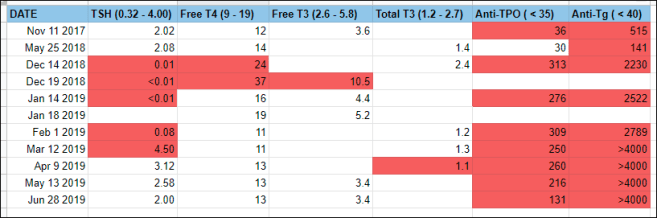
The new lab test results are also encouraging. Free T4 and T3 stayed at the same levels, within normal range. TSH went down to 2.0, which is below the previous value of 2.58. This is a positive result, since some research indicates that the optimal cut- off value of TSH is 2.5 MIU/L. Anti-TPO antibodies have also decreased.

TSH cut off point based on depression in hypothyroid patients

test_jul2019

On a side note, I found that someone wrote their undergrad honors thesis on Hymenolepis diminuta. “Impacts of Hymenolepis diminuta (benign helminth worm) colonization on chronic pain and the central nervous system in Sprague Dawley rats“. If I would go back in time, I would prefer to also study neuropsychology. Unfortunately in my undergrad I was calculating bond and option prices. Glad to hear whenever someone is doing research on treatments for autoimmune disorders, specifically the connection between neuropsychiatric problems and inflammation. “The results from this project partially support the tenets of the hygiene hypothesis. Though behavioral results following CCI surgeries were inconclusive, molecular investigation of cytokine levels in the hippocampus showed promotion of an anti-inflammatory cytokine milieu due to the upregulation of IL-10 and downregulation of its receptor. These promising results guide future research toward investigation of cytokine levels in other brain regions, such as the amygdala.

Impacts of Hymenolepis diminuta (benign helminth worm) colonization on chronic pain and the central nervous system in Sprague Dawley rats

HDC Therapy for autoimmune disorders

HDC, hymenolepis diminuta cysticercoids, is a larvae stage of a nice and friendly rat tapeworm, an adult of this species can be 20-60cm long. You might have a thought now “what am I reading and why?”, but hold on. Humans are not the usual host of hymenolepis diminuta, rats are, and in humans this helminth does not develop into an adult. There have been very few cases documented of humans being infected with adult HD. For this reason the HD larvae, HDC, is one of the species chosen for helminthic therapy as it does not reproduce inside humans, stays in the gut, does not reach adult size, and yet modulates the immune system as it tries to survive.

HDC survive in humans only for about two weeks, therefore for continuous therapy, HDC would need to be ingested at these intervals. HDC will live in the small intestine and attach to the intestine wall. There are no reports in the scientific literature of H. diminuta mis-migrating to other organs in humans. In a scientific review of helminthic therapy from 2016, HDC was listed as one of the more popular helminths:

Five physicians monitoring more than 700 self-treating patients were interviewed. The results strongly support previous indications that helminth therapy can effectively treat a wide range of allergies, autoimmune conditions and neuropsychiatric disorders, such as major depression and anxiety disorders. Approximately 57% of the self-treating patients observed by physicians in the study had autism. Physicians reported that the majority of patients with autism and inflammation-associated co-morbidities responded favourably to therapy with either of the two most popular organisms currently used by self-treaters, Hymenolepis diminuta and Trichuris suis. However, approximately 1% of paediatric patients experienced severe gastrointestinal pains with the use of H. diminuta, although the symptoms were resolved with an anti-helminthic drug. Further, exposure to helminths apparently did not affect the impaired comprehension of social situations that is the hallmark of autism. These observations point toward potential starting points for clinical trials, and provide further support for the importance of such trials and for concerted efforts aimed at probing the potential of helminths, and perhaps other biologicals, for therapeutic use.

Practices and outcomes of self-treatment with helminths based on physicians’ observations

Here is another paper from 2017 reviewing HDC use by self-treating individuals. Unfortunately there are not many clinical trials with treatment and control groups, therefore we have to rely on information on experiences from people like me who are obtaining helminths and treating themselves. ” In this study, we describe the production and use of HDCs in a manner that is based on reports from individuals self-treating with helminths, individuals producing helminths for self-treatment, and physicians monitoring patients that are self-treating.” The authors from Duke University are quite optimistic about helminthic therapy: “Helminthic therapy, the use of helminths to treat disease, offers the best hope of decreasing inflammation via immunomodulation rather than immunosuppression, and probably also improves mucosal barrier function.”

Production and Use of Hymenolepis diminuta Cysticercoids as Anti-Inflammatory Therapeutics

I was glad to read that I already have access to the most hopeful treatment for inflammation. I have to say that I tried a lot of supposedly anti-inflammatory treatments  and was quite disappointed with most. Turmeric lattes, green tea extract, probiotic capsules, licorice root tincture…  Personally, I don’t really want to buy any more supplements, except basic ones such as vitamin D, since I live in cold and dark Canada, and occasionally I take fish oil on days that I don’t eat seafood.

The idea behind helminthic therapy, on the other hand, is quite logical to me. It’s not a promotion of another one magical super inflammatory ingredient. The logic is that humans and certain helminths have evolved to co-exist in a symbiotic relationship and therefore our immune system has also evolved  to be modulated by molecules that helminths produce. Recent eradication of helminths in humans in developed countries could be resulting in a destruction of a beneficial symbiotic relationship and increase in rate of autoimmune diseases.

“Graph the data points, and the trend is unmistakable. Since the 1950s, rates of multiple sclerosis, Crohn’s disease, type 1 diabetes, and asthma have soared by 300% or more (1). Similar graphs depict concurrent spikes in hay fever and food allergies (2).”

“Prevalence of food allergy in preschool children is now as high as 10% in Western countries, but remains just 2% in areas like mainland China (). The number of new cases of type 1 diabetes (T1D) in Finland per year is 62.3 per every 100,000 children, compared with just 6.2 in Mexico and 0.5 in Pakistan (). Ulcerative colitis, a form of inflammatory bowel disease (IBD), is twofold higher in Western Europe than in Eastern Europe—6.5 per 100,000 people versus 3.1 per 100,000 ().”

In each of these disorders, either the immune system is overreacting to a trigger, such as pollen, peanuts, or pollution, or it’s attacking tissues it shouldn’t, such as beta cells in the pancreas in the case of T1D and in the intestines in IBD.”

News Feature: Cleaning up the hygiene hypothesis


Green tea vs. infliximab and tracking thyroid antibodies

I continue to track my thyroid antibodies and I will post my results here in case this information will be useful for anyone. Trust me, I know how fluctuating thyroid hormones suck and what it means for you in terms of your mood, energy, sleep. Today is a work day and since my work place is quite formal, I should be there by 9am. Nine to five, the usual. Well I couldn’t fall asleep until 1am and woke up at 6am. I felt cold shivers and my palms were sweaty. I lay in bed for a while but it was no use, I could not fall back asleep. I did get to work slightly after 9, not very late, sat down in my cubicle, turned on my screens and stared at the code. What was I supposed to be doing today? I had forgotten. My hands continued to sweat and I had chills. Emotionally I felt as if a train had run over me. I couldn’t remember on what task I stopped at on Friday. I sensed such fatigue that I was finding it difficult to sit up straight.

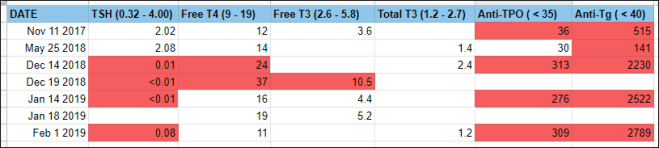
Logically I knew the cause, it all happened as my endocrinologist said it would. After a period of hyperthyroidism, my TSH went to almost non-existent level and now instead of being too high, my thyroid hormones were quickly dropping. Lab test on February 1st showed that free T4 and total T3 were near their lower threshold and TSH was also low. Since TSH continues to be low, and it is the thyroid-stimulating hormone, it was not stimulating the thyroid enough to produce T3 and T4. Therefore it’s likely that today hormone levels were even lower and I went into hypothyroid state.

test_feb2019

So this is what’s going on with my thyroid. I think the hypothyroidism symptoms are definitely starts as I have been getting chills, freezing even when my thermostat is at 24 degrees, not having the energy to talk to people even though I did not want to stay home on a Friday night. In theory, according to my endocrinologist, after an acute hyperthyroidism again, there will be not enough thyroid hormones stores in the thyroid gland, and therefore levels will fall. After sometime function should restore to normal, but hypothyroid state could last 8 months. I will be waiting for this normalization and in the meantime I will keep trying to reduce inflammation, because what else is there left to do.

Recently I came across a paper on green tea and exercise intervention for arthritis patients. “One-hundred and twenty subjects who had a mean age of (60.7 ± 2.53 years) and had been diagnosed with rheumatoid arthritis at least ten years previously were randomly included in this study. Patients were treated with infliximab, green tea, or a supervised exercise program for six months. Disease activity markers as well as antioxidant activity of green tea extracts were estimated before supplementation using in vitro assays. [Results] Rheumatoid arthritis patients treated with green tea for 6 months alone or in combination with infliximab or an exercise program showed significant improvement in disease activity parameters, including C-reactive protein, and erythrocyte sedimentation rate, swollen and tender joints counts, and modified Stanford Health Assessment Questionnaire score, along with an increase in serum levels of bone resorption markers, i.e., deoxypyridinoline, amino-terminal telopeptide of type 1 collagen, and bone alkaline phosphatase, at 6 months of after initial treatment. The European League Against Rheumatism and American College of Rheumatology scores revealed more clinical improvement in the disease activity of rheumatoid arthritis patients treated with green tea along with exercise compared with rheumatoid arthritis patients treated with infliximab or exercise combinations.”

Green tea and exercise interventions as nondrug remedies in geriatric patients with rheumatoid arthritis

I know this is just one study and we should take the results with a grain of salt, but I see no harm in including green tea and exercise in your day. I want to note that I am not looking for only ‘natural’ treatments neither am I trying to prove that they are better. I am only looking for something that I can implement. When I was referred for IV corticosteroids treatment, I was happy to receive it and did see improvements. Since then I have not been prescribed any treatment even though I did ask for it. It’s possible that something like infliximab would work for me, but I have no access to it. I have Hashimoto’s thyroiditis, celiac disease, and autoimmune encephalopathy, but inflixiamab is a medication that is prescribed for rheumatoid arthritis.

Infliximab is a monoclonal antibody that suppresses some parts of the immune system. Infliximab is a lab made molecule that binds to a specific cytokine TNF-α (chemical messenger), which is one of the causes of autoimmune reaction. TNF-α is tumor necrosis factor aplha, a cell signaling protein involved in system inflammation. Wiki states that Dysregulation of TNF production has been implicated in a variety of human diseases including Alzheimer’s disease, cancer, major depression, psoriasis and inflammatory bowel disease (IBD). Though controversial, studies of depression and IBD are currently being linked to TNF levels.

Infliximab has to be given as IV and cannot be taken orally as it would be destroyed by the digestive system. In the US the cost is about $19,000 per month and is mainly prescribed to arthritis patients who have not responded to other therapy. No one is going to prescribe it to me here in Canada.

Therefore, given that I have not been prescribed any meds at this point, and my psych and neuro keep debating whether to place me on IVIG or not, for now I have to do things on my own. Also trying green tea and exercise of course doesn’t cancel out any other treatment that I might get. I continue with helminthic therapy and hopefully I will get an IVIG trial (intravenous immunoglobulin therapy).

Tracking Anti-TPO and Anti-Tg antibodies

I have been tracking my thyroid antibody levels and I want to share my results, in case this information will be of use to someone. I have been diagnosed with Hashimoto’s encephalopathy in April 2017 and I was treated with intra-venous steroids (IV Solu-Medrol) in December 2017. In November 2017, before the steroids treatment, my thyroid hormone levels were normal, but my Anti-Tg and Anti-TPO antibodies were elevated. I was experiencing many symptoms such as fear, a sense of dread, severe anxiety, feeling of worthlessness. After the immunosuppressant treatment with steroids I had improvements in different areas of being, such as a desire to read fiction again, new interest in men, increased self-confidence, desire to play violin again. As you can see from the table below, my antibody levels decreased after the treatment, in May 2018 they were lower than in November 2017.

test_jan2019

I was improving in 2018 – I started this blog, took a violin lesson, read sci-fi. In the fall I completed mandatory adoption training and started the homestudy process with a social worker for adoption of children. This is something that I want to do because I wanted to have a family for a while, but I don’t feel that passing on my genes is the right way, as likely my children would inherit the same autoimmune disorders.

In November 2018 I started feeling worse. It’s difficult to pinpoint a specific cause of this as there were several events. I have been gluten-free now since 2016. Unfortunately one day in November I ate a whole bowl of lentil soup with barley because the take-out place stated that the soup only contains lentils and rice. Such large amount of gluten after not eating it at all for several years could have caused an immune reaction. I also got the flu twice, and the flu can also lead to the immune system being overactive even after the virus is gone. I also decided to try different probiotic supplements which had supporting evidence in regards to positive results for mood improvement. Maybe it did not go well for me and these bacterial strains were not accepted by my immune system.

In end of November I started to frequently wake up around 5am covered in sweat. At work my palms were sweating and I was getting chills. My pulse was regularly over 90 and my temperature was around 37.3 Celcius even though I did not have a flu nor a cold. My neck and face were burning, I felt waves of heat and shivers going through my body. After work by 6 pm I was lethargic and couldn’t get myself to exercise as I was in the fall. It was very clear to me that my thyroid hormones should be tested, so I right away went to the lab. December results show that at that point my TSH was already very low because my thyroid hormones were too high. Thyroid antibodies are also elevated.  Ultrasound confirmed inflammation of the thyroid. I was referred to Women’s College Hospital and they repeated blood tests again. It can be seen that December 19th results indicate even higher thyroid hormone levels.

At the moment when all this occurred, I had a regular schedule – sleeping 12am to 8am, working 9 to 5, was doing yoga before I became lethargic. I was not on any medications but I was taking several probiotic supplements – saccharomyces boulardii, and two probiotics for mood. I decided to stop all supplements and also came across an article about anti-Saccharomyces cerevisiae antibodies. I did not have testing for these antibodies, but I decided to try going yeast-free and see whether symptoms improve. I stopped drinking my kefir and eating my sourdough bread. Also avoiding alcohol and vinegar. It’s interesting to see that in January my thyroid hormones were at their normal levels. It’s hard to say whether there was an issue with the supplements that I was taking, or yeast in food, or a random event of thyroid inflammation. I will be testing again at the end of January. There is not much evidence that yeast consumption could cause an autoimmune flare, but I will still keep going yeast free for sometime to see whether there will be improvements.

Anti-Saccharomyces cerevisiae antibodies (ASCA) are associated with body fat mass and systemic inflammation, but not with dietary yeast consumption: a cross-sectional study

“The findings indicate that ASCA IgG-positivity may be linked to the generalized inflammation commonly seen with increased adiposity, but not to dietary yeast intake. Other potential causes for the raised ASCA IgG concentrations, such as genetic predisposition, deviations in the gut microbiota and cross-reactivity of ASCA with other antigens, were not explored.”


Autoimmune Encephalitis and Genes

I was involuntarily hospitalized for the first time in the psych ward in October 2015, in June 2016 I was diagnosed with Hashimoto’s thyroiditis, and then in April 2017 I was diagnosed with autoimmune encephalitis (specifically Hashimoto’s encephalitis). I was diagnosed also with coeliac disease, which is a permanent autoimmune disorder. That is a lot of diagnoses, all autoimmune related, and they all came in a short period of time (it’s not surprising though, because often people with an autoimmune disease tend to have more than one – this fact points to the genetic cause of a faulty immune system).

Since then I have done a lot of research on my condition, but in 2015/2016 I was probably still in denial. I remember being certain that my depression was due to only external circumstances such as my job, not having kids, small apartment, etc. I kept thinking  – I know it’s the bachelor apartment that is making me feel claustrophobic and trapped, I have never lived in such a small space, this is not how people should live, this is causing my depressive state. I was living in a small bachelor apartment together with my boyfriend and it was not enough space for two people, you start to irritate each other, and that could have been contributing to stress. But I also know that I was not accepting that something was also biologically wrong with me, that I needed to investigate medical causes. At that point I was already seeing a correlation between eating wheat and brain fog, but then I would go again to buy a chicken wrap and when my thoughts would become less clear, I still kept repeating – it cannot be the wrap, this seems very unlikely, it must be something else – probably I am allergic to mold in the apartment. It’s also very difficult to analyze the situation when your brain is getting worse daily and you don’t realize it.

The correlation between eating wheat and brain fog, based on my observations, was very strong though, and I did finally start eating gluten-free. Then I received my test results for antibodies associated with coeliac disease and the values were right at the threshold. To me this was a clear indication of disease, since even though I had been not eating gluten for a while, the antibodies were still present and the value was right at the point of making a positive diagnosis.

What also helped me understand and accept why I was hit with a number of autoimmune disorders. Several years ago I sent my saliva to 23andme and got back results telling me that I was mostly Eastern European (obvious to me) and Balkan (was a surprise). Also that I had increased risk of developing age-related macular degeneration. I thought this was irrelevant to my symptoms and I did not open 23andme again for a while. I logged in a few months ago and the website had been updated, there was a new result – Celiac Disease.

23andme_1

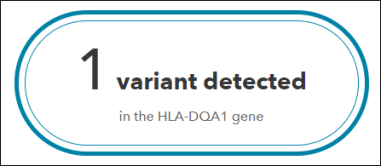
From 23andme – the variant tested is a change from a C to a T in the DNA sequence of the HLA-DQA1 gene. The rs2187668 marker is a tag SNP for the HLA-DQ2.5 haplotype.

From Wiki: DQ2.5 and the linked DR3 are associated with probably the greatest frequency of autoimmune occurrence relative to any other haplotypes. The haplotype is positively associated with coeliac disease, dermatitis herpetiformis, juvenile diabetes, Lambert-Eaton myasthenic syndrome (LEMS), Sjögren’s syndrome, and autoimmune hepatitis (although significant proportion of the risk is secondary to coeliac disease). DR3 and/or DQ2.5 are linked to the following diseases: Moreen’s ulceration, “bout onset” multiple sclerosis, Grave’s disease and systemic lupus erythematosus.

I can’t say that I felt great when I read this, but I was able to say to myself – “now I understand”. I was not unlucky to have an onset of autoimmune encephalitis, a very rare disease, I am unlucky to carry this genetic mutation, but given this mutation, coeliac disease and encephalitis are not so unlikely. How to use this information? I printed out my test results and handed them to my family doctor and my neuropsychiatrist. There is a difference between a one in a lifetime occurrence of brain inflammation after some virus and being genetically predisposed to multiple autoimmune diseases. Unfortunately it is the second case for me and I want to make sure that doctors are aware of this.

Another genetic mutation listed in my 23andme results is Gene: CFH. The variant tested is a change from a T to a C in the DNA sequence of the CFH gene. It results in a version of the complement factor H protein that may not be able to regulate the immune system as well. I have read about this mutation and did not find that much information, but it does mention that it also affects immune system regulation. Perhaps it is the combination of the two mutations – in the HLA and CFH genes that for me lead to development of several autoimmune diseases. Research and time will tell us more.

Sourdough for mood and hyperglycemia

Not all carbs are equal. Several months ago I made a discovery of gluten-free sourdough recipes and now I eat it almost daily. I obtained a sourdough starter, and now that I have one, it can live on forever, as long as it gets fed. It can definitely outlive me! Feeding the starter is very simple and requires only two ingredients – brown rice flour and warm water. After being on a strict AIP diet for almost a year (a lot of food group exclusions, including grains), it was very exciting to once again eat bread, burritos, and blueberry muffins. I no longer follow the strict AIP diet since it did not turn out to be a magical cure for me. I did improve a bit, but that does not mean that every food group exclusion contributed to my improvement. One person (me) trying the AIP diet is not a clinical trial with test and control groups.

I do see strong correlation between my psychotic episodes and consumption of gluten/cow’s dairy/corn/chocolate/nightshades (bell peppers are fine, small amounts of tomatoes are also OK)/ high-glycemic foods. I haven’t found issues with eating gluten-free whole grains and also found no evidence that grains are inflammatory. I don’t consider any blog post evidence. If a blog post refers to a research paper, then I will consider their claim. I do agree that anecdotal evidence is also useful, it was other people’s stories that helped me to obtain the right diagnosis after being misdiagnosed with schizophrenia by my psychiatrist. Only we can’t know from anecdotes what actually helped, if someone did the AIP diet and they got better – was it because they eliminated all the foods the diet suggests to exclude, or they could have improved just as well if they only avoided refined carbohydrates?

The evidence that I found so far indicated that whole grains are actually anti-inflammatory. For example, whole grain intake was found to be inversely related with inflammatory protein concentrations, while refined grain intake was positively related with the inflammatory markers. “In summary, whole grain intake was inversely related to PAI-1 and CRP plasma concentrations, but these relationships were attenuated by the addition of metabolic variables to the model. Refined grain intake was positively independently related to plasma PAI-1 concentrations.

Whole and Refined Grain Intakes Are Related to Inflammatory Protein Concentrations in Human Plasma

I introduced whole grains after a year of strict AIP diet with no problem. I find that consumption of whole grains puts me in a more relaxed state of mind, I actually consume half a cup of rolled oats with green banana flour in the evening for better sleep. Sourdough is great because the baked goods end up with a low glycemic index after the fermentation process. I have a glucometer that I use to determine my blood glucose response to different food products. The standard test is a two-hour glucose test. Two slices of gluten-free bread increased my blood sugar to over 11 mmol/L two hours after consumption, which is a sign of high blood sugar. I did the same test with sourdough bread and sourdough muffins and my blood sugar was back to under 6 mmol/L two hours after consumption, which is a big difference. Short grain brown rice is also a high glycemic index food, while long grain brown rice was found to have lower glycemic index.

Sourdough allows me to eat the foods that I missed out on for so long, at the same time it does not cause a blood glucose spike for me. I have used sourdough to make pizza crust, tortillas, bread, and muffins. Currently I am learning to use fermented batter to cook dosas, an Indian dish. Controlling blood sugar for me means also stabilizing my mood. A glucose spike and then crash turns me lethargic and weepy, it takes away my energy, I definitely want to avoid that. Sourdough allows me to have blueberry muffins for breakfast, goat cheese toast, burritos – all without the consequences of an emotional roller coaster. High glycemic foods may also promote inflammation and given my diagnosis of autoimmune encephalitis, that is something that I definitely want to avoid as well.

Hyperglycemia can cause inflammation through varying mechanisms that result in the production of free radicals and pro-inflammatory cytokines (19, 24). Thus, high glycemic index and glycemic load diets may stimulate inflammation. Glycemic index is the blood glucose-raising potential of the carbohydrates in different foods. A more accurate indicator of the relative glycemic response to dietary carbohydrates, however, is glycemic load. Glycemic load incorporates the relative quality of carbohydrates characterized by the glycemic index. Consumption of high-glycemic index foods results in higher and more rapid increases in blood glucose levels than the consumption of low-glycemic index foods. Rapid increases in blood glucose are potent signals to the β-cells of the pancreas to increase insulin secretion, which can cause a sharp decrease in glucose levels and lead to hypoglycemia (25). In contrast, the consumption of low-glycemic index foods results in lower but more sustained increases in blood glucose and lower insulin demands on pancreatic β-cells (26).

Dietary carbohydrates and inflammation

40684760_10157598823358906_7112051833098469376_o