I have made some exciting mushroom finds over the weekend. The weather has been hot, but it also has been raining on and off, it is a good time for mushroom photoshoots. The first location that I visited was Limberlost Forest & Wildlife Reserve, which is located near Huntsville, Ontario. Did you know that we have tent camping not only in the Ontario Provincial Parks like Algonquin, Killbear, and Sandbanks, etc? There are a lot of other camping locations that have their own booking websites, so you will not see these campgrounds on ontarioparks.ca.
Limberlost Forest & Wildlife Reserve is a private reserve owned by the same group behind Haliburton Forest & Wildlife Reserve, rather than a provincial park. It spans roughly 10,000 acres and includes 20 private lakes. They offer 55 campsites across the property, and you have to book them directly on their website at https://limberlostforest.com/campsites/. While they are essentially car camping sites where you park right at or near your spot, they are much more secluded than standard provincial park campsites. Most of them are right on the waterfront. I’ve stayed at sites on both Solitaire Lake and Lee Lake, where we could swim straight from our campsite without seeing any neighbors. They also don’t allow motor boats on the lakes, which I love. As someone who likes swimming long distances, I hate when there are a ton of motor boats and jet skis passing by, creating noise and making it unsafe.
The property has quite an interesting history. It was established in 1921 as a lodge and wilderness reserve, and in 1939 they installed the region’s first mechanized ski lift for their ski hill. Eventually, the reserve was sold around 1969 to local cottage owners known as “The Friends of Limberlost,” and then to a developer. The developer was actually planning to build townhomes around Solitaire Lake, and if that had happened, it would have been a prime spot to take photos for r/UrbanHell. But the plan fell through, and at least this piece of nature was saved. Or maybe wasted? Who needs wildlife reserves and public access? We need more condos, right?
So if you’re into car camping with some comfort and want a secluded waterfront site, I definitely recommend it. You’re unlikely to find campsites this good at provincial park car camping sites. It feels much closer to backcountry, but with your car parked right near you. There are also several hikes running along the shorelines, including trails around Solitaire Lake, Buck Lake, and Clear Lake & Turtle Lake (which are connected by a small wooden bridge). You can find the trail map directly on their website.
The second spot I visited was the Wilson’s Falls trail near Bracebridge. Parking was easy right at the end of Sander Drive. The trail starts right in between two cottages, where you follow the path to a set of wooden stairs heading down to the North Branch Muskoka River. From there, you turn right and continue along the trail toward Wilson’s Falls itself. There are plenty of great swimming spots with sandy shores along the way.
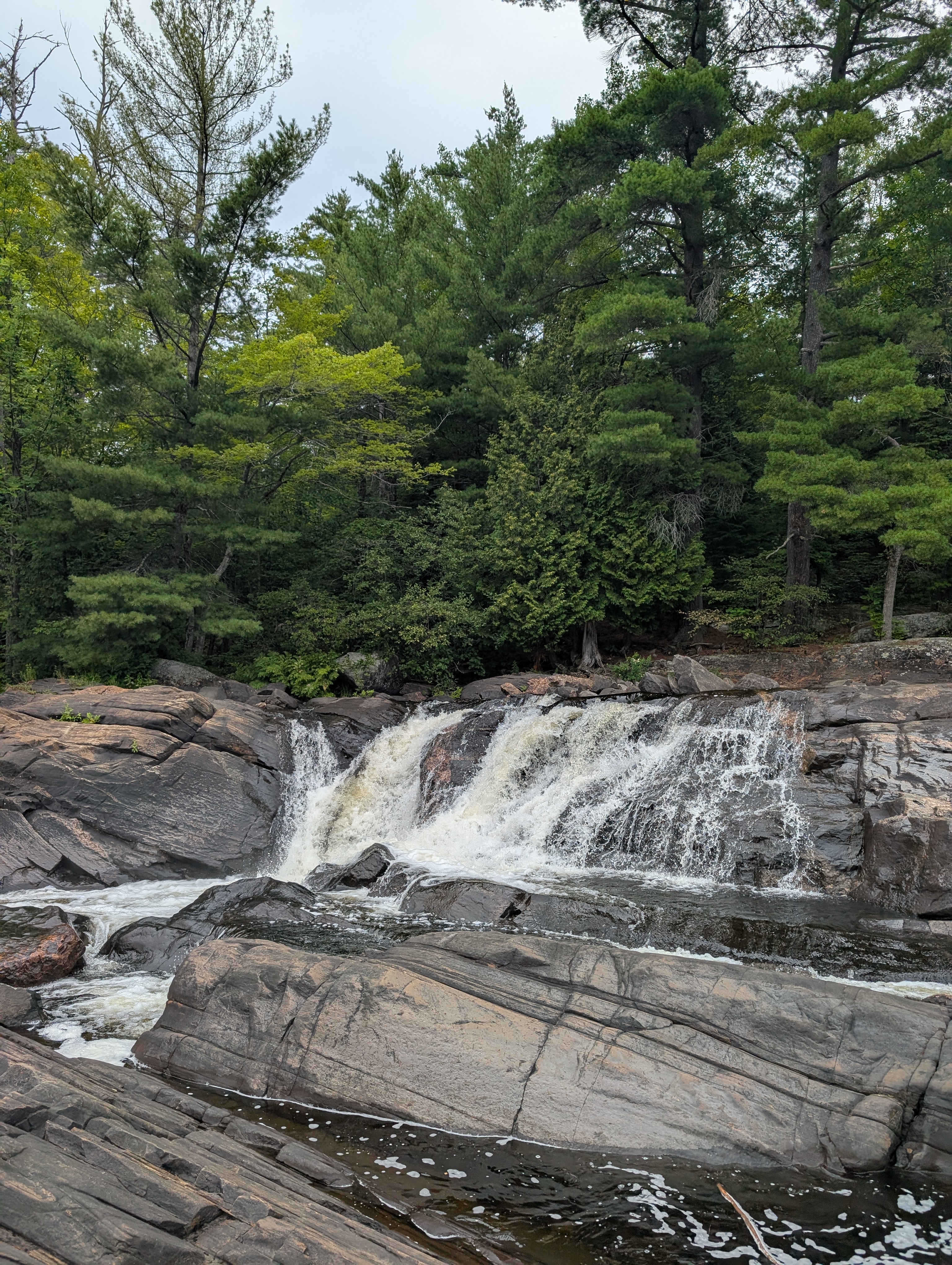
Wilson’s Falls is the largest and wildest of the three main waterfalls in Bracebridge. The falls were formed thousands of years ago during the last ice age, when melting glaciers stripped away the topsoil and forced the North Branch of the Muskoka River over the exposed, billion-year-old Canadian Shield bedrock. This bedrock is part of the ancient geological core of North America, made up of dense, highly pressurized metamorphic and igneous rocks like gneiss and granite. Because this rock is far too hard for the river to erode flat, the water spills over its stepped, fractured layers to create the cascading drop into the river gorge. While there is a hydro dam operating at the top today, the river section below remains open to explore with lookouts along the banks.
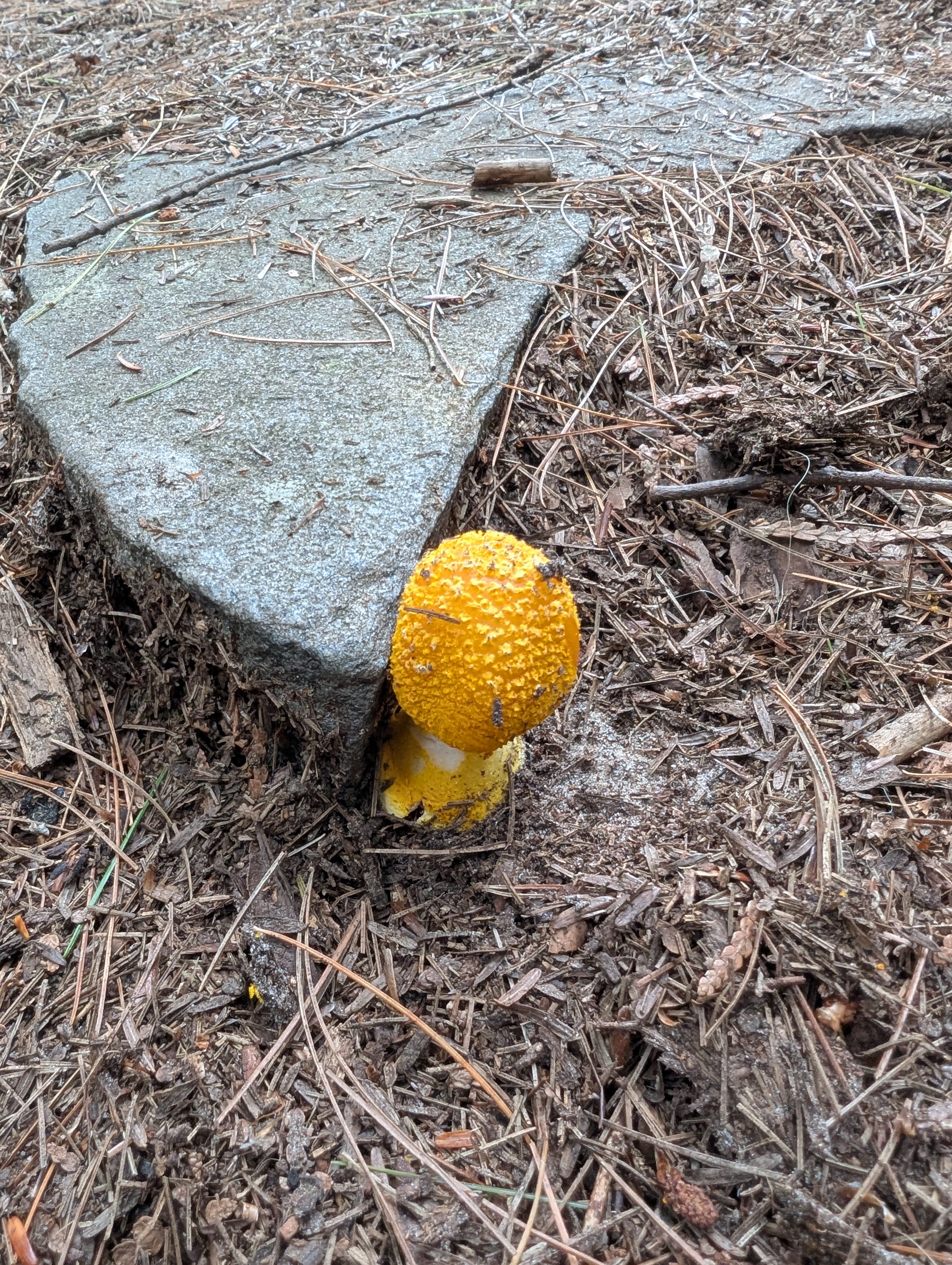
The brightest mushroom I spotted wasn’t very large, but finding a vivid yellow mushroom is always exciting. It looks a lot like an Amanita muscaria, which means it’s almost certainly toxic. The typical white spots on the cap aren’t clearly visible, likely because rain washed them off or forest debris rubbed them away as the mushroom grew. Those spots aren’t actually part of the cap itself, but rather fragile remnants of a universal veil that wrapped around the mushroom when it was small and broke apart as it expanded. Still, I’m pretty sure it belongs to the Amanita family. This family contains potent psychoactive neurotoxins like ibotenic acid and muscimol. Unlike typical “magic mushrooms,” which contain psilocybin and act on serotonin receptors to produce classic hallucinations, Amanita toxins target GABA and glutamate receptors in the brain. Instead of a standard psychedelic trip, they produce a sedative-hypnotic, delirium-like state often described as intoxication, extreme confusion, or dreamlike trance states. If ingested, these compounds cause symptoms that start with severe nausea, vomiting, and dizziness, before progressing to intense visual distortions, confusion, loss of muscle coordination, and even seizures or comatose states in severe cases.
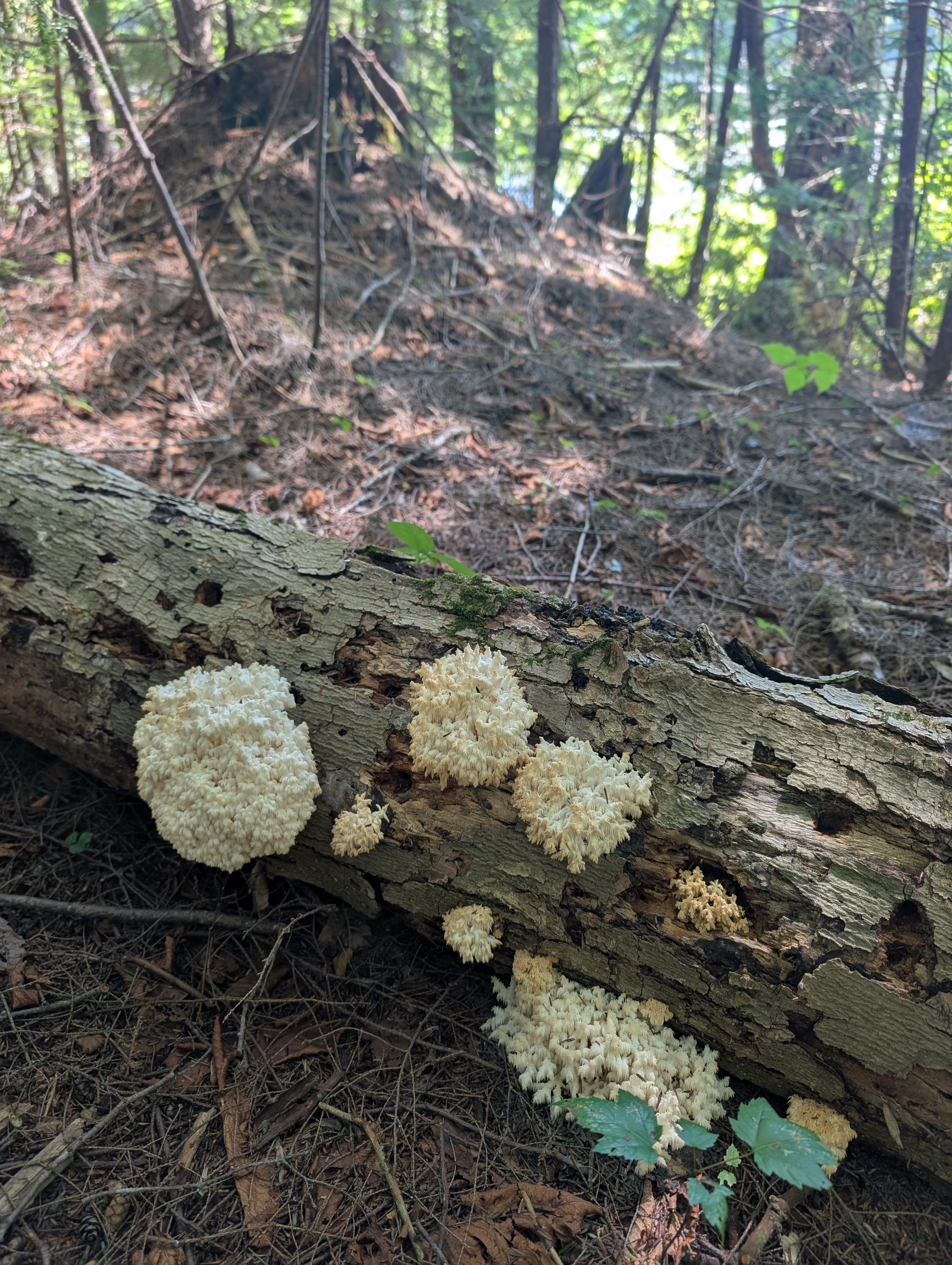
The next mushroom I found was growing directly on a fallen tree trunk, and it looked just like Coral Tooth Fungus (Hericium coralloides). Instead of a traditional cap with gills or pores underneath, it belongs to the tooth fungus group, which reproduces by dropping spores from hundreds of downward-hanging spines that look like tiny cave stalactites. It is closely related to Lion’s Mane and functions as a saprotrophic fungus, breaking down tough organic compounds like lignin and cellulose in dead wood. It thrives on fallen tree trunks because decaying wood provides carbohydrates, carbon, nitrogen, and minerals like potassium and phosphorus. Rather than forming a solid cap, it grows extensive branches to maximize its surface area, allowing it to pack in thousands of spore-releasing spines while maintaining access to moisture inside the log.
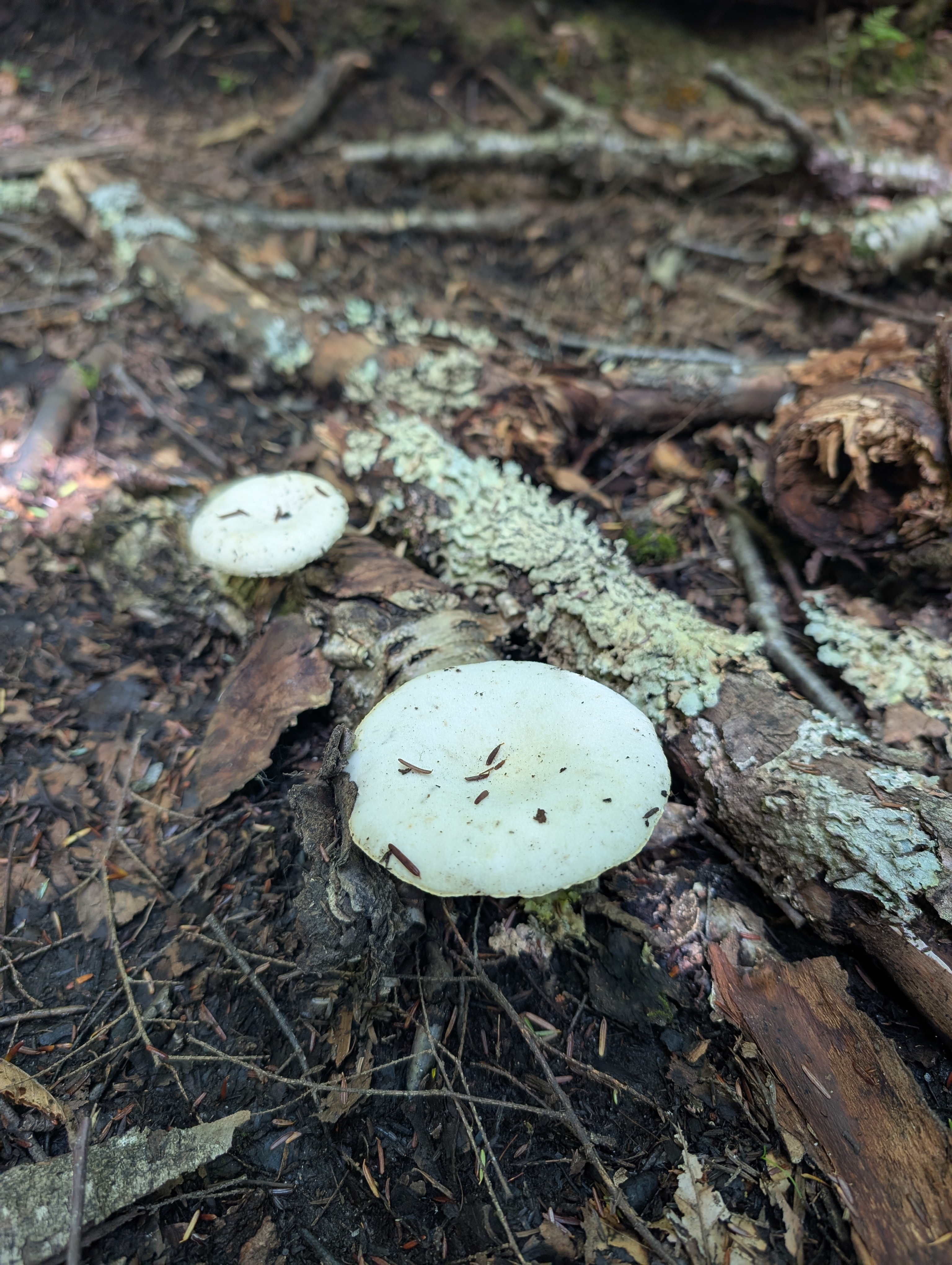
The third mushroom that I found looks quite plain, probably a Russula. It had a flattened white cap with a slightly depressed center, typical of mature specimens in this genus. The common name in Slavic countries like Russia literally translates to “raw-eater” due to a traditional belief that they can be consumed uncooked, but eating raw Russula can cause gastrointestinal distress because many species contain mild toxins that only break down during cooking. Unlike many other mushrooms that have fibrous flesh, Russula species are distinct because their tissue is composed of spherical cells. This unique structure makes the entire mushroom, from the cap to the stem, exceptionally brittle, causing it to snap cleanly like chalk when handled. They are mycorrhizal fungi, meaning they form symbiotic relationships with the root systems of surrounding trees, trading mineral nutrients and water for tree sugars.
Please take the time to visit and support Limberlost Forest. They offer free daily use to everyone, which is very generous given how much effort they put into maintaining the property, campsites, and trails. Because their only revenue comes from campsite, cabin, and cottage rentals, paying to stay at their campsite or buying from their office store directly supports their maintenance and helps keep the property open.

